Who Are the Best Large Bearing Manufacturers in China?
Choosing the best Large Bearing manufacturer in China requires more than comparing catalog sizes or online prices.
A bearing may look impressive on paper. Its service record matters more. ZWZ, LYC, HRB, C&U, and Luoyang-based producers serve demanding sectors, including wind power, mining, railways, construction, and heavy machinery. However, capability varies between factories, product families, and production batches. Buyers should examine material traceability, heat-treatment controls, dimensional inspection, load testing, and after-sales engineering support. Factory audits can reveal details that brochures omit, such as storage conditions, grinding accuracy, and operator discipline.
Tedric A. Harris, a respected rolling-bearing authority, wrote, “The bearing cannot be considered apart from the system in which it operates.” That principle remains highly practical. A Large Bearing must match shaft deflection, housing stiffness, lubrication, contamination levels, speed, and installation practice. A strong manufacturer should explain these interactions clearly, not merely recommend the largest model. Look for ISO certifications, documented quality procedures, application references, and transparent failure analysis. Ask for test reports.
Still, this comparison has limits. Public information is often incomplete. Some suppliers publish excellent specifications but provide little field evidence. Others have quieter reputations and stronger engineering teams. The “best” choice may therefore depend on application risk, delivery distance, customization needs, and lifecycle cost. This guide will compare leading Chinese manufacturers through those practical criteria, while recognizing that no ranking can replace an independent technical review.
What Defines a Leading Large Bearing Manufacturer in China?
A leading large bearing manufacturer in China is defined by more than factory size or production capacity. It must understand how bearings behave inside cranes, wind turbines, mining equipment, and heavy construction machinery. Experienced engineers study load direction, rotation speed, operating temperature, vibration, and installation conditions before recommending a design. Guesswork has no place here.
Reliable production begins with controlled steel, accurate forging, and stable heat treatment. Each critical dimension requires documented inspection, including raceway geometry, hardness, clearance, and surface finish. Modern coordinate measuring machines can detect small deviations that ordinary tools may miss. Assembly areas should remain clean, organized, and traceable. Every bearing needs a clear record, from raw material to final testing.
Proof matters. A capable manufacturer provides technical drawings, inspection reports, test data, and responsive after-sales support. It should also explain limitations honestly, rather than promise performance in every condition. No supplier is flawless. Some may still improve delivery planning or communication across time zones. That weakness deserves attention. Strong manufacturers welcome field feedback and use failure analysis to refine designs. Their authority comes from repeatable results, practical engineering, and transparent evidence—not impressive claims.
China’s Major Large Bearing Manufacturers and Their Core Strengths
China’s major large bearing manufacturers differ in scale, equipment, and application focus. Some operate integrated plants with steel forging, heat treatment, turning, grinding, and final inspection under one roof. This structure can shorten lead times and improve process control. It also makes troubleshooting more direct when a bearing shows unusual wear.
Their core strength is often customization. Large bearings for wind turbines, cranes, tunnel machines, steel mills, and marine equipment require different load ratings and sealing designs. Experienced producers can adjust raceway geometry, internal clearance, cage materials, and corrosion protection. Many use CNC grinding, coordinate measurement, ultrasonic testing, and load simulation before shipment. However, impressive machinery does not automatically prove long-term reliability.
Project records matter. A manufacturer supplying low-speed slewing bearings may not excel at high-speed cylindrical designs. Buyers should examine fatigue test data, dimensional reports, heat-treatment records, and field references from similar equipment. Export-ready factories usually provide technical drawings, installation guidance, and replacement support. Communication quality is another practical advantage, especially when shaft deflection or mounting errors appear on site. I have found that some suppliers present broad product ranges, yet their strongest expertise remains narrow. That is not necessarily a weakness. It can mean deeper process knowledge in demanding applications. Small details matter.
Key Products and Industries Served by Large Bearing Producers
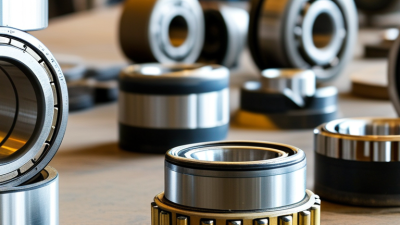
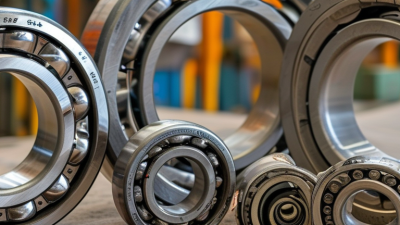
China’s large bearing manufacturers produce components for machines where size, load, and downtime matter. Their main products include slewing bearings, spherical roller bearings, cylindrical roller bearings, and thrust bearings. Split bearings are useful when shafts cannot be removed easily. Custom designs can also match unusual housing dimensions.
Slewing bearings support excavator platforms, tower cranes, and wind turbine nacelles. Heavy-duty roller bearings serve steel mills, mining conveyors, and cement plants. In ports, large bearings operate inside ship loaders and cargo handling equipment.
Hydropower stations often require bearings that tolerate continuous rotation, moisture, and changing loads. Rail systems use specialized bearings for wheelsets and traction equipment. Paper, rubber, and food-processing machines need smoother running and controlled lubrication.
Reliable producers usually combine forging, heat treatment, precision grinding, and final inspection under one quality system. Engineers check hardness, roundness, clearance, vibration, and sealing performance. Traceable material records also help users investigate failures. In practical projects, correct lubrication is as important as bearing selection. A strong bearing can still fail inside a dirty or misaligned machine.
No bearing suits every application. This is easy to overlook. High loads, corrosion, installation limits, and maintenance access must be reviewed together. Some manufacturers offer testing with simulated loads, but test conditions may not fully reflect a dusty mine or a coastal port. Buyers should compare load ratings, service support, delivery consistency, and inspection data, not only price.
How Chinese Bearing Manufacturers Compare on Quality and Innovation
The best large bearing manufacturers in China should be judged by evidence, not production volume alone. The China Bearing Industry Association reported industry revenue above RMB 270 billion in 2023. That scale supports strong engineering experience, but it does not guarantee consistent quality.
Quality differences appear in steel cleanliness, heat treatment, grinding accuracy, and inspection records. ISO 281 provides a common method for calculating bearing life. Reliable manufacturers should also provide load-test results, dimensional reports, and traceability for each batch. In factory visits, buyers should examine polished raceways under magnification. Small marks can become serious fatigue failures. Some suppliers still rely too heavily on final inspection. That is a weakness, not a quality system.
Innovation is becoming more practical. The International Energy Agency reports that industrial energy efficiency remains a major global priority. Chinese manufacturers are responding with low-friction designs, improved seals, sensor-ready housings, and predictive-maintenance data. These developments can reduce heat and downtime, but advertised performance may exceed field results. More independent testing is needed. I would compare laboratory claims with operating records from mining, wind, and heavy machinery applications.
Tips:
Request ISO 9001 certification, material certificates, ISO 281 calculations, and sample test data. Check whether the factory controls heat treatment internally. Ask for failure-analysis reports, not only brochures. A lower price can be useful, but only when service life is verified.
Factors to Consider When Choosing a Large Bearing Manufacturer in China
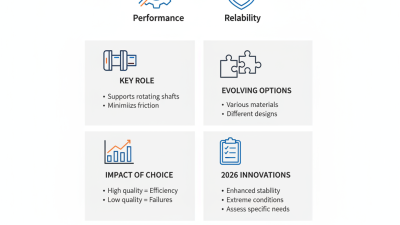
Choosing a large bearing manufacturer in China requires more than comparing prices. The supplier should understand heavy loads, slow rotation, vibration, and harsh working environments. Ask for production records, material certificates, and heat-treatment data. These documents reveal whether the process is controlled or merely described well.
Inspect the manufacturer’s equipment and testing procedures. Precision lathes, grinding machines, hardness testers, and dimensional inspection tools should match the bearing size. Request reports for radial clearance, runout, surface finish, and load testing. Traceability is essential. Each bearing should link to a batch, operator, inspection result, and shipment record. Paperwork matters.
Evaluate engineering support before placing a large order. A reliable manufacturer can review drawings, mounting conditions, lubrication methods, and expected operating hours. It should explain tolerances clearly, not hide behind technical language. Check production capacity, spare-part availability, packaging quality, and realistic lead times. A low quotation may exclude testing, tooling, or protective treatment. Measure twice. References from similar industries can help, but they are not perfect proof. Even careful buyers may overlook communication delays or inconsistent inspection standards. A trial order, independent dimensional check, and written acceptance criteria can expose these weaknesses before they affect an entire project.