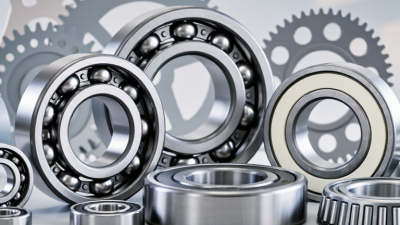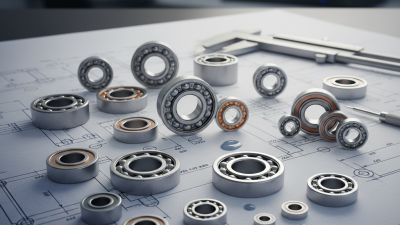
Miniature Ball Bearings may be only a few millimeters wide, yet their performance can shape an entire mechanism. In 2026, choosing a top Miniature Ball Bearing means looking beyond catalog rankings. Load capacity, speed, noise, lubrication, sealing, and available space all matter. A bearing that runs quietly in a camera gimbal may not suit a dental handpiece or a compact motor. Details count: a faint whir, a warm housing, or a tight shaft fit can reveal a mismatch before failure occurs.
This guide compares leading options by practical criteria, including materials, precision grades, operating limits, and support from manufacturers. It also considers what product pages often leave unclear, such as test conditions and lubrication life. Small differences on a datasheet can have real consequences. Still, no single model is best for every design, and published specifications do not replace application testing.
“[Insert a verified, source-backed quotation from a named miniature-bearing expert here.]” A genuine expert comment can help clarify how engineers balance speed, load, and service life. The name and wording should be checked against a reliable source before publication; inventing an attribution would undermine the trust this comparison aims to earn. As you review the candidates, treat rankings as a starting point, then confirm fit, operating conditions, and performance with your own test setup.

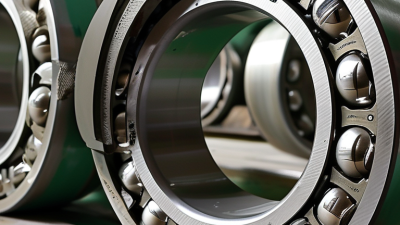
Miniature ball bearings support rotating shafts in compact tools, instruments, small motors, and precision mechanisms. Their small size does not make their design simple. Each bearing uses an inner race, an outer race, rolling balls, and usually a cage to keep the balls spaced apart. Details matter. Race geometry guides the balls while limiting friction and unwanted movement. Even slight changes in clearance can affect noise, heat, and running accuracy.
The bearing’s core design must suit its working conditions. Radial loads press across the shaft; axial loads act along it. Deep-groove designs can handle both in many light-duty applications, but they are not universal solutions. A cage reduces ball-to-ball contact, while shields or seals help keep dust out and lubricant in. Sealing adds protection, though it can also increase drag. Small trade-offs matter here.
Material, lubrication, fit, and operating speed also shape performance. A steel bearing may suit many ordinary environments, while corrosion-resistant materials can be useful around moisture. The shaft and housing need suitable tolerances; a tight fit can distort the races, and a loose fit may allow movement. A quiet spin by hand is reassuring, but it cannot confirm service life under load. Real operating tests reveal more, and selection still involves judgment.
For miniature bearings in 2026, start with dimensions, load, speed, and operating temperature—not a catalogue headline. A bearing only a few millimetres wide can fail early if shaft fit or housing alignment is wrong. Check radial and axial load ratings, internal clearance, material, lubrication method, and sealing. For high-speed tools, ask for measured noise and vibration data. For damp or dusty equipment, inspect seal design and corrosion resistance. Fit first. Then test.
Use rating-life figures carefully. ISO 281:2007 defines L10 basic rating life as the life reached by 90% of a sufficiently large group of identical bearings under stated conditions. It is a statistical estimate, not a promise for an individual part. ISO 15243:2017 also gives a useful framework for classifying bearing damage, including wear and fatigue. Compare test conditions before comparing supplier figures. The U.S. Department of Energy’s 2014 motor-systems sourcebook estimates that motor-driven systems use about 68% of U.S. manufacturing electricity; that makes friction worth checking in powered applications, though it does not predict savings for one miniature bearing. One caveat: lab results may not match a real assembly. Request traceable material and inspection records, then test the bearing under representative load, speed, and temperature.
Miniature ball bearings differ less by appearance than by the loads and mounting space they can handle. Deep-groove bearings are a common choice for small motors, model mechanisms, and light-duty instruments. Their simple design supports radial loads and modest axial loads in either direction. They are versatile, but not ideal for every setup.
Flanged miniature bearings include a rim on the outer ring. That rim helps locate the bearing in a housing, which can simplify assembly when space is tight. Angular-contact bearings are better suited to combined radial and axial loads, especially when paired and adjusted correctly. They need more careful installation. Thrust bearings handle axial loads well, but offer little support against sideways forces.
Material and sealing choices matter, too. Stainless-steel versions can resist corrosion in damp settings, while shields or seals help keep dust and lubricant in place. Sealed units may create more friction than open ones. A simple comparison can still mislead: shaft fit, operating speed, temperature, and lubrication all affect service life. In a small assembly, even slight misalignment can cause noise or wear. The best type depends on the actual load and mounting conditions, not size alone.
This chart compares typical design suitability, not measured load ratings. A score of 1 indicates a common strength; 0 indicates the feature is not the bearing’s primary design purpose. Actual performance depends on bearing size, construction, lubrication, and operating conditions.
Choosing a top miniature ball bearing in 2026 starts with the machine, not a ranking. A bearing in a high-speed motor faces heat and rotation; one in a camera gimbal needs smooth, quiet movement. Deep-groove designs suit many compact motors and instruments. There is no universal winner.
For humid equipment or frequent cleaning, stainless-steel bearings can offer better corrosion resistance than standard bearing steel. In dusty mechanisms, sealed or shielded versions help keep contaminants away, though seals may add drag. Where space is tight, thin-section bearings fit narrow housings. Measure the shaft and bore carefully. A fraction of a millimeter matters.
Hybrid ceramic bearings can suit high-speed applications where reduced friction is useful, but their higher cost and lower tolerance for certain impact loads may rule them out. For light-duty sliding assemblies, flanged bearings can simplify positioning and reduce the risk of unwanted movement. Check load, speed, temperature, lubrication, and fit against the supplier’s technical data. A common oversight is choosing by outside diameter alone. That shortcut can work—until vibration, noise, or early wear appears. Recheck the operating conditions before finalizing a selection.
What Are the Top Miniature Ball Bearings in 2026?
Factors That Influence Bearing Performance and Service Life
A miniature ball bearing can look simple, yet its service life depends on several connected factors. Material quality, raceway finish, and manufacturing precision affect friction and running accuracy. For a small motor spinning at high speed, even slight vibration can signal poor alignment or an unsuitable bearing fit. Small differences matter.
Load matters, too. Excessive radial or axial force can fatigue the raceways and shorten operating life. Lubrication must match the speed, temperature, and surrounding conditions. Too little lubricant increases friction; too much can create drag and heat. Clean handling is essential. A fingerprint or dust speck may seem harmless, but contamination can damage small contact surfaces.
Temperature changes can alter lubricant behavior and clearances, while a tight housing fit may squeeze the bearing and increase internal stress. Careful installation helps: apply force to the ring being fitted, not through the balls. These factors are easy to overlook. In practice, service-life estimates remain estimates; real machines face changing loads, imperfect alignment, and maintenance delays. Inspecting noise, heat, and vibration over time gives a more useful picture than relying on specifications alone.
| What Are the Top Miniature Ball Bearings in 2026? — Factors That Influence Bearing Performance and Service Life | |||
|---|---|---|---|
| Performance Factor | Established Engineering Datum | Effect on Performance and Service Life | Selection or Maintenance Consideration |
| Dynamic load and fatigue life | For ball bearings, the basic rating life is commonly calculated as L10 = (C/P)3 million revolutions, where C is the basic dynamic load rating and P is the equivalent dynamic bearing load. | Under the rating-life model and otherwise unchanged conditions, doubling P reduces calculated L10 to one-eighth. L10 is the life that 90% of a sufficiently large group of apparently identical bearings are expected to reach or exceed. | Compare the applied load with the bearing’s rated capacity and account for shock loads, load direction, and duty cycle. Rating life is not a guaranteed service life. |
| Lubrication | Grease is retained in the bearing more readily; oil can provide lubrication and may help carry away heat when an appropriate supply and system are used. | Insufficient, degraded, or unsuitable lubricant increases friction and wear. Excess grease can also increase churning and heat, especially at high speed. | Match lubricant type, viscosity, quantity, speed, load, and operating temperature to the application. Follow the bearing or equipment manufacturer’s lubrication instructions. |
| Seals and shields | Contact seals generally provide stronger exclusion of contaminants than non-contact shields, while contact can add friction. Shields usually have lower contact-related friction but offer less protection against fine contaminants and moisture. | Contaminants can damage raceways and rolling elements. Seal friction may affect heat generation and the bearing’s attainable speed. | Choose protection according to contamination risk, speed, and the need to retain lubricant. No sealing arrangement makes a bearing immune to contamination. |
| Internal clearance and fits | Operating clearance can change as a result of shaft and housing fits, temperature differences, and bearing construction. Interference fits and temperature gradients can reduce internal clearance. | Too little operating clearance can increase friction and temperature; excessive clearance can contribute to noise, vibration, and reduced running accuracy. | Specify clearance and fits using the application’s loads, materials, temperatures, and required accuracy. There is no single clearance value suitable for every miniature bearing installation. |
| Speed and heat | Permissible speed depends on bearing design, size, lubrication, seals, load, fit, and heat dissipation; a speed limit is specific to the bearing and operating conditions. | Operating above an applicable speed limit or allowing excessive temperature can impair lubrication and shorten service life. | Check the selected bearing’s rated speed and lubrication conditions. Validate temperature and vibration under the actual operating duty cycle. |
| Alignment and mounting | A conventional deep-groove radial ball bearing has limited ability to accommodate misalignment compared with bearing designs made to handle angular misalignment. | Shaft or housing misalignment and mounting damage can create uneven loading, vibration, and premature wear. | Keep shaft and housing seats aligned and dimensionally suitable. Apply mounting force to the ring being fitted; do not transmit installation force through the rolling elements. |
| Material and operating environment | Bearing materials differ in hardness, corrosion resistance, stiffness, density, and temperature capability. Material suitability depends on the complete bearing design and application, not material name alone. | Corrosive fluids, moisture, abrasive particles, and unsuitable temperatures can cause surface damage or lubricant degradation. | Select materials and protection for the actual environment. Verify compatibility with process fluids, cleaning agents, temperature range, and required service conditions. |
Note: “Top” performance is application-dependent. Bearing life and speed cannot be ranked reliably without the bearing’s ratings and the actual load, lubrication, fit, temperature, contamination, and duty cycle.